

Recruiting at startups has always been a wild ride, but the landscape in 2026 feels almost like science fiction. Imagine a world where AI scouts your next engineer before you’ve even written the job post, and candidates skip cover letters entirely by just sharing their profiles. This blend of tech and talent isn’t just futuristic—it’s happening now. But what does it really mean for those building teams and chasing dreams? Let’s dig into the trends transforming startup hiring today and tomorrow.
The AI Revolution in Startup Recruitment
The landscape of startup hiring is undergoing a dramatic transformation, thanks to the rapid adoption of AI recruitment tools. Today, more than 55% of companies use AI-powered systems for resume screening and candidate selection, a figure that continues to rise as startups seek faster, smarter ways to build their teams.
AI Recruiters: Scanning Millions for Precision
Modern AI recruiters can scan over 500 million candidate profiles, filtering and shortlisting applicants with unmatched speed and accuracy. By leveraging advanced algorithms and unique calibrations, these tools identify the best-fit candidates in a fraction of the time it would take a human recruiter. As Raj Patel, a startup founder, notes:
"Startups embracing AI recruiting gain a competitive edge in securing specialist roles."
Resume Scoring and Predictive Analytics
One of the most significant advantages of AI recruitment tools is their ability to minimize human bias through resume scoring and predictive analytics. These systems assess not only skills and experience but also predict a candidate’s potential performance and cultural fit. This data-driven approach accelerates the hiring process and leads to better long-term matches between startups and new hires.
Efficiency Through Automation
AI-powered scheduling tools are streamlining the interview process by automatically booking meetings and coordinating calendars. This automation reduces administrative overhead and allows founders and hiring managers to focus on more strategic tasks. For startups, where every hour counts, this efficiency is a game-changer.
AI Agents: Empowering, Not Replacing, Recruiters
Contrary to common fears, AI agents are designed to complement human recruiters, not replace them. As Tina Smith, a talent acquisition expert, explains:
"AI-driven recruitment is not replacing humans but empowering them to find the best talent faster."
Startups increasingly rely on AI agents for initial screening, resume analysis, and interview scheduling, while human recruiters focus on relationship-building and final decision-making.
Leveling the Playing Field for Startups
AI recruitment tools are now accessible to even small and mid-sized startups, offering features like free applicant tracking systems and seamless integration with existing HR platforms. This democratization of technology allows emerging companies to compete for top talent alongside larger organizations.
Demand for AI/ML Specialists on the Rise
The AI revolution is not just changing how startups hire—it’s also reshaping who they hire. By 2026, AI/ML specialists are expected to make up 10-15% of startup hires, reflecting the growing need for technical expertise. Globally, AI is projected to create 97 million new jobs by the end of 2026, further fueling demand for skilled professionals in this field.
AI recruiters scan millions of profiles for precise shortlisting.
Resume scoring and predictive analytics reduce bias and accelerate hiring.
AI tools automate scheduling and streamline communication.
AI/ML specialists are a growing share of startup hires.
AI agents empower human recruiters, creating a collaborative hiring process.
Remote Work and Hybrid Teams: The New Norm
Remote work trends have moved far beyond a passing phase—they now define the landscape of startup hiring. As Emily Chen, HR Director, puts it,
"Remote work isn’t a trend anymore—it’s the fabric of modern startup culture."
Recent data shows that remote roles account for approximately 40% of new startup jobs in 2026, with 29% of these positions being hybrid and 13% fully remote. This shift highlights the growing demand for flexibility among both startups and job seekers, fundamentally changing how teams are built and operate.
Flexibility as a Core Value in Startup Hiring
Startups and candidates alike increasingly view flexibility as a non-negotiable factor in both hiring and retention. The ability to choose between remote, hybrid, or in-office work is now a key differentiator for top talent. Job seekers are actively searching for remote opportunities in startups, attracted by transparent job listings that display salary, stock options, and benefits upfront. This openness not only streamlines the application process but also empowers candidates to negotiate with confidence.
Hybrid Teams: Balancing Creativity and Autonomy
Hybrid teams are emerging as a preferred model, blending the best aspects of in-person collaboration with remote work autonomy. As Carlos Rivera, Startup CTO, notes,
"Hybrid teams bring out the best of both worlds: collaboration and flexibility."
In these setups, employees benefit from the creative energy of face-to-face interactions while enjoying the productivity and work-life balance that remote work offers. This hybrid autonomy requires startups to adopt new management styles and invest in collaboration tools that support seamless communication across distributed teams.
Global Talent Pools and Lean Operations
One of the most significant advantages of remote and hybrid work trends is the ability to tap into global talent. Startups are no longer limited by geography, allowing them to address talent shortages in specific regions and build more diverse teams. This expanded access also supports lean burn strategies, as companies can reduce or eliminate office costs, reallocating resources to growth and innovation.
Challenges: Culture, Communication, and Management
While the benefits are clear, remote and hybrid models introduce new challenges. Managing culture and communication in distributed teams requires deliberate strategies, such as regular virtual check-ins, transparent goal-setting, and investment in digital engagement tools. Hybrid autonomy demands managers who can foster trust, accountability, and connectivity without micromanaging.
Remote roles: 40% of startup jobs
Hybrid positions: 29% of startup jobs
Fully remote: 13% of startup jobs
As work trends continue to evolve, remote work and hybrid teams are not just options—they are the new norm, shaping the future of startup hiring and redefining what it means to build a successful, resilient company.
Fractional Recruiting and Lean Talent Acquisition Strategies
The startup hiring landscape is rapidly evolving, with fractional recruiting and lean talent acquisition strategies taking center stage. As startups prioritize agility and cost savings, these approaches are becoming essential for building high-performing teams without the overhead of traditional hiring models.
Fractional Recruiting: Flexible Talent for Startup Growth
Startups are increasingly turning to fractional recruiting to scale their teams flexibly. Rather than committing to full-time hires, founders can engage experienced recruiters or specialists on a part-time or project basis. This model allows startups to access top-tier talent and niche expertise without the long-term commitment or high costs of permanent employment.
Fractional recruiters bring deep industry knowledge and networks.
They support startups during critical growth phases or talent sprints.
This approach is ideal for lean burn startups needing to stay agile.
"Fractional recruiting lets startups stay lean while attracting top talent." – Megan Lewis, Recruitment Consultant
Short-Term Recruitment Outsourcing and Talent Sprints
With project needs and funding cycles often in flux, startups are embracing short-term recruitment outsourcing and talent sprints. These strategies allow companies to quickly fill immediate skill gaps, launch new initiatives, or respond to market changes without overextending resources.
Recruitment outsourcing provides access to a larger talent pool.
Talent sprints focus on rapid hiring for specific projects or roles.
Startups can scale teams up or down as business needs shift.
"Recruitment outsourcing is the future of agile hiring in startups." – David Park, HR Strategist
AI Recruitment Tools: Powering Lean and Fractional Hiring
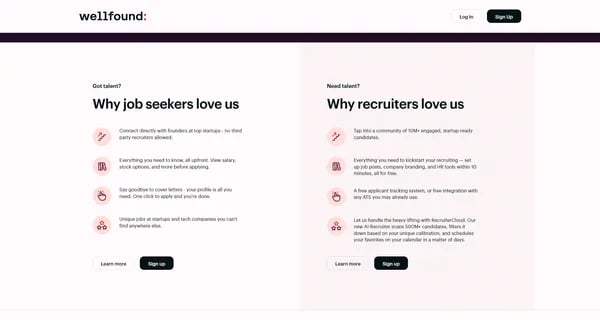
The integration of AI recruitment tools is revolutionizing how startups approach fractional recruiting and lean hiring. Platforms like Wellfound’s AI-Recruiter automate candidate sourcing, vetting, and interview scheduling, freeing up valuable time for founders and hiring managers.
AI scans millions of profiles to match unique startup needs.
Automated scheduling and vetting streamline the hiring process.
Small teams can efficiently compete for specialist roles against larger enterprises.
By leveraging AI, startups can maintain a lean burn approach—minimizing costs while still securing high-quality talent. This technology-driven model supports scalable hiring at the pace startups require, making recruitment outsourcing and fractional recruiting even more effective and accessible.
According to recent trends, recruitment process outsourcing and AI-driven talent acquisition are set to increase in 2026, as startups seek greater flexibility and efficiency. These strategies not only reduce hiring costs but also enable startups to adapt quickly to changing demands, ensuring they remain competitive in the race for top talent.
The Rising Demand for AI/ML Specialists and Niche Roles
The landscape of startup hiring is rapidly evolving, with a sharp increase in demand for AI/ML specialists and other highly specialized roles. By 2026, industry research projects that AI/ML specialists will represent 10-15% of all startup hires, underscoring their growing importance in the tech ecosystem. Startups are not only competing for top talent in artificial intelligence and machine learning, but also in areas like security, revenue operations, and emerging sectors such as space and crypto.
Specialist Roles: The Engine of Innovation
As technology advances, startups rely on niche expertise to drive innovation and maintain a competitive edge. Roles in machine learning, cybersecurity, and revenue operations are now considered mission-critical. According to Sophia Patel, AI Recruitment Specialist,
"Specialist AI talent will be the backbone of startup innovation moving forward."
These positions are essential for building cutting-edge products and scaling rapidly in dynamic markets.
Transparent Pay and Data-Driven Negotiation
With the competition for specialist roles intensifying, transparent pay and clear salary data have become crucial for both candidates and employers. Platforms now provide upfront information on salary, stock options, and benefits, empowering job seekers to make informed decisions. Michael Green, Compensation Analyst, notes,
"Transparent pay levels the playing field for candidates and companies alike."
Startups increasingly use data-driven salary research to benchmark compensation by job title, industry, and company size, ensuring fair and competitive offers in a tight labor market.
The Expanding Talent Pool and New Career Pathways
The rise of AI is not only creating new roles but also expanding the talent pool. However, this growth comes with intensified demand, as more startups seek candidates with specialized skills. Early career opportunities are also evolving, with startups investing in junior talent development and offering unique roles that are often unavailable in larger companies. This shift is opening doors for professionals at the start of their careers, especially in fast-growing sectors like AI, space, and crypto.
Women-Led Startups and Economic Impact
Women-led startups are making significant contributions to the tech workforce, particularly in emerging fields. In the US alone, women-led businesses have generated over $1.8 trillion in economic impact, and they are at the forefront of hiring for specialist roles in AI/ML and beyond. Their leadership is helping to diversify the talent pipeline and foster inclusive growth across the industry.
AI/ML specialists to comprise 10-15% of startup hires by 2026
Transparent pay and salary research empower better negotiations
Women-led startups drive hiring in emerging tech sectors
Early career pathways are expanding for junior professionals
Unconventional Startup Hiring Insights and Wildcards
The landscape of startup hiring is shifting rapidly, driven by new technologies, changing candidate expectations, and a desire for greater transparency. One of the most significant changes is the move away from traditional application methods. Cover letters are quickly becoming obsolete as platforms embrace a profile-first approach. Candidates can now apply with a single click, using their detailed profiles to showcase skills and experience. As Lauren Kim, Career Coach, notes,
"A profile-first approach revolutionizes how candidates apply and get hired."
This streamlined process not only saves time but also allows startups to focus on the substance of each applicant, rather than outdated formalities.
Another unconventional trend is the direct connection between job seekers and startup founders. By removing third-party recruiters from the equation, platforms enable candidates to interact directly with decision-makers. This direct line of communication accelerates the hiring process and improves the likelihood of finding the right fit. Jason Miller, a Startup Advisor, highlights this benefit:
"Getting directly in touch with founders cuts through the noise and speeds up hiring."
To further democratize recruitment trends, modern hiring platforms now offer free applicant tracking systems (ATS) and human resources (HR) tools. Startups can post jobs, manage applicants, and build their employer brand in minutes, all without incurring extra costs. The integration of AI-driven solutions like Wellfound’s Autopilot takes this a step further. Autopilot scans millions of candidates, filters them based on unique criteria, and schedules interviews—often within days. This use of AI recruitment reduces friction and levels the playing field for startups competing for top talent.
The debate over remote work remains active, especially in the tech sector. Some industry leaders predict remote work is here to stay, while others see a gradual return to hybrid or in-person models. Regardless, startups are increasingly open to remote roles, expanding their talent pools and offering greater flexibility to candidates.
Emerging sectors like crypto, space technology, and women-led startups are also shaping the future of startup hiring. These industries present unique challenges and opportunities, attracting candidates who are eager to work on cutting-edge projects and contribute to diverse teams. The rise of salary transparency—with upfront information on pay and stock options—empowers job seekers to negotiate better offers and make informed decisions.
Ultimately, both startups and job seekers value platforms that prioritize user experience and foster a sense of community. The combination of intuitive design, transparent information, and innovative technology is redefining what it means to hire—and be hired—in the startup world. As the future unfolds, these unconventional insights and wildcards will continue to shape a more dynamic, efficient, and inclusive hiring landscape.