
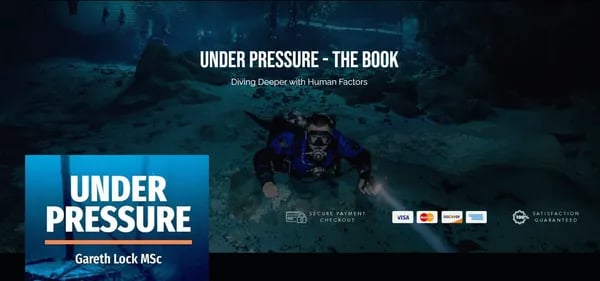


The first time someone forgets to check their pressure gauge on a dive, it rarely feels like a life-or-death moment—until suddenly, it is. Once, I saw a buddy surface ten meters from his safety stop, red-faced, quietly furious with himself for a simple mistake that could have cost him dearly. For years, I chalked these stories up to “human error”—but what if that’s missing the point? Gareth Lock’s 'Under Pressure' argues that real dive safety goes much deeper than avoiding technical slip-ups: it’s about understanding the minds, habits, fears, and interactions of the people beneath the surface.
Flipping the Script: Why 'Human Error' Is Just the Tip of the Iceberg
For decades, diving accident statistics have pointed to “human error” as the leading cause of incidents and fatalities. Yet, as Gareth Lock argues in Under Pressure: Diving Deeper with Human Factors, this explanation is dangerously incomplete. Diving accident causes are rarely the result of a single mistake or a random event. Instead, they emerge from a complex web of decisions, overlooked warning signs, and subtle breakdowns in communication—what Lock refers to as the “chain of decisions and conditions.”
“Incidents rarely just happen—they result from a chain of decisions and conditions.” — Gareth Lock
Lock’s analysis of over 30 real-world diving mishaps, involving both novices and elite professionals, reveals a consistent pattern: complacency, normalization of deviance, and communication gaps are universal risk factors. These findings echo lessons from high-reliability industries like aviation and healthcare, where diving fatality analysis and accident reviews show that approximately 80% of historical accidents are attributed to ‘human error.’ However, simply blaming individuals does little to address the underlying issues that allow these errors to occur.
Beyond Blame: The Domino Effect in Diving Accidents
Lock’s case studies demonstrate that most diving accidents are not isolated events. Instead, they are the final outcome of a domino effect—where small rule breaks, ignored procedures, or unchecked assumptions accumulate over time. This process, known as the normalization of deviance, leads divers to accept minor risks as routine until disaster strikes. By the time a critical incident occurs, it is rarely the result of a single poor decision, but rather a series of missed opportunities for intervention.
Complacency: Even experienced divers can fall into the trap of routine, skipping essential checks or underestimating risks.
Poor Communication: Misunderstandings within teams or between buddies often go unnoticed until they become critical.
Systemic Factors: Equipment design, training gaps, and environmental conditions all interact to shape diver behavior.
Reframing ‘Human Error’ Through Systems Thinking
Lock challenges the diving community to move beyond the surface-level explanation of ‘human error.’ Instead, he advocates for a systems thinking approach, where every aspect of the dive—equipment, environment, team dynamics, and organizational culture—is examined for error-producing conditions. This perspective shifts the focus from blaming individuals to understanding how and why mistakes happen, enabling divers to identify and address the root causes before they lead to accidents.
By drawing on insights from aviation and healthcare, Lock illustrates that meaningful improvement in diving safety requires more than technical skill. It demands a culture of openness, psychological safety, and a willingness to learn from both near-misses and failures. In this way, Under Pressure reframes diving fatality analysis as an opportunity for growth, rather than a search for someone to blame.
More Than Mask Skills: The Power of Non-Technical Know-How
Traditional diver training often centers on technical mastery—buoyancy control, gas management, and equipment handling. Yet, as Gareth Lock’s Under Pressure: Diving Deeper with Human Factors reveals, the true foundation of diving safety best practices lies in non-technical skills for divers. These include situational awareness, decision-making processes in diving, teamwork, and communication. As Mark Powell succinctly puts it:
"Competence underwater is as much about mindset as skillset."
Lock’s research and real-world case studies make it clear: even the most experienced divers are vulnerable to incidents not because of a lack of technical knowledge, but due to lapses in non-technical skills. Communication failures, for example, can be as hazardous as equipment malfunctions. In one case, a team of highly skilled cave divers misjudged a changing current because no one voiced their concerns—an error chain that nearly led to disaster. These stories underscore that diving team performance depends on more than individual expertise; it hinges on how divers interact, share information, and make decisions under pressure.
Situational Awareness: The ‘What? So What? Now What?’ Mantra
Lock emphasizes situational awareness as a core non-technical skill. The framework—“What? So What? Now What?”—encourages divers to continually assess their environment, interpret what changes mean, and decide on the next steps. This simple mantra helps teams make sense of evolving risks and avoid complacency. Effective decision-making and situational awareness are not innate; they require deliberate practice and reflection, just like any technical skill.
Teamwork, Communication, and Speaking Up
Non-technical skills for divers extend far beyond personal awareness. Teamwork and communication are critical to safe, effective diving. Lock’s book details cases where respected divers—Jill Heinerth, Richard Lundgren, and others—faced near-misses not from lack of experience, but from breakdowns in communication or unclear leadership. In high-stress environments, the courage to speak up or question a plan can be lifesaving. Training to both lead and follow, and to foster open dialogue, is as vital as mastering any piece of equipment.
Frameworks for Better Decision-Making
Lock introduces practical frameworks, such as the GUE method, to help divers improve their decision-making processes in diving. These tools guide teams through structured assessments of risk, encourage the sharing of perspectives, and help prevent the normalization of deviance—a gradual drift from safe practices. By routinely applying these frameworks, divers can better identify error-producing conditions before they escalate.
Situational awareness: Constantly monitor and interpret the dive environment.
Communication: Share observations and concerns openly within the team.
Leadership and followership: Know when to take charge and when to support others.
Structured decision-making: Use checklists and frameworks to guide choices under stress.
Lock’s work challenges divers to rethink what it means to be “skilled.” Mastery underwater is not just about bubbles and buoyancy, but about the invisible threads of teamwork, communication, and mindset that keep everyone safe.
Teamwork in the Deep: Why Group Dynamics Could Save (or Sink) You
When it comes to diving safety, the silent force shaping every dive is not just the equipment or the environment—it’s the team. Gareth Lock’s Under Pressure: Diving Deeper with Human Factors places team dynamics in diving at the center of incident prevention and performance. How divers interact, share information, and resolve tension can mean the difference between a routine dive and a critical incident.
Team Culture: The Unseen Influencer
Team culture is more than camaraderie; it’s the foundation for how divers communicate, make decisions, and respond to stress. Lock’s research, supported by over 30 real-world case studies, shows that even expert divers are vulnerable to mistakes when group dynamics break down. Complacency, unclear roles, or unspoken concerns can quickly escalate into dangerous situations. As Lock notes, “Diving accidents rarely ‘just happen’—they are the result of complex, interconnected factors, with team culture often at the core.”
Psychological Safety and Just Culture in Diving Community
A key insight from high-reliability industries—like aviation and healthcare—is the value of psychological safety for divers. When divers feel safe to speak up about errors or near-misses, the entire team benefits. Lock champions the concept of Just Culture in the diving community, where reporting mistakes is encouraged, not punished. This shift transforms incident reporting from a blame game into a powerful tool for group learning and improvement.
“A culture of learning is the surest way to safer dives.” — Richie Kohler
Lock’s approach demystifies diving incident analysis. Instead of focusing solely on ‘who messed up,’ teams are encouraged to ask, “What happened? Why did it make sense at the time? How can we prevent it in the future?” This mindset, borrowed from oil & gas and aviation, leads to more honest conversations and faster safety gains.
Mutual Trust Over Solo Heroics
Lock’s work highlights that mutual trust and open dialogue always outperform individual heroics. In environments where psychological safety is prioritized, divers are more likely to share concerns, question assumptions, and double-check each other’s work. This collaborative approach is not just theoretical—industry testimonials confirm dramatic improvements in both performance and morale when Just Culture principles are adopted.
Divers report more incidents and near-misses, leading to better prevention strategies.
Teams judge less and learn more, accelerating skill development and confidence.
Open analysis of failures becomes routine, not taboo, creating a cycle of continuous improvement.
Lock provides actionable frameworks for dive shops and agencies to build these cultures—rewarding transparency, supporting collective problem-solving, and making safety a shared responsibility. As the diving community continues to embrace these principles, the path to safer, more resilient diving becomes clearer.
Beyond Checklists: Systems Thinking and Everyday Dive Decisions
Traditional approaches to diving safety often rely on checklists, rules, and post-incident blame. However, as Gareth Lock’s Under Pressure: Diving Deeper with Human Factors reveals, true safety comes from understanding the complex interplay between people, equipment, procedures, and the environment—a concept known as systems thinking in diving operations. This approach reframes risk management for divers as an ongoing negotiation, not a one-time task.
Lock’s analysis of real-world incidents—featuring respected divers like Jill Heinerth and Richard Lundgren—shows that accidents rarely result from a single mistake. Instead, they emerge from a web of error-producing conditions embedded in training routines, equipment choices, operational pressures, and even group culture. Everyday risks, such as rushing to kit up, skipping buddy checks, or normalizing minor shortcuts, highlight how easily performance shaping factors like fatigue and stress can tip the balance toward error.
“When you see the system, not just the symptom, you prevent tomorrow’s accident.” — Phil Short
Moving Beyond Blame: Seeing the Whole System
Lock argues that focusing solely on individual mistakes—what’s often labeled as ‘human error’—misses the bigger picture. Diving equipment and human error are deeply connected; a poorly maintained regulator or an unfamiliar computer interface can set the stage for problems, especially under stress. Similarly, environmental factors like current, visibility, and temperature interact with diver experience and team communication, shaping decisions in subtle but powerful ways.
By adopting systems thinking, divers and instructors can:
Identify how training gaps, equipment design, and operational habits create vulnerabilities
Recognize the influence of fatigue, stress, and time pressure on decision-making
Encourage open discussion of near-misses and mistakes without fear of blame—supporting a Just Culture
Shift from reactive fixes to proactive risk management for divers at all levels
Actionable ‘Quick Wins’ for Everyday Diving
Lock’s book bridges the gap between case study analysis and practical improvement. He offers simple, actionable steps—‘quick wins’—that divers, instructors, and agencies can implement immediately:
Pause and Plan: Take a moment before each dive to assess not just the plan, but the context—equipment, team readiness, and environmental conditions.
Normalize Speaking Up: Foster a culture where anyone can voice concerns or observations, regardless of experience level.
Review and Reflect: After each dive, discuss what went well and what could be improved, focusing on system factors rather than individual blame.
Monitor Performance Shaping Factors: Be aware of how fatigue, stress, and workload affect judgment and communication.
By integrating these principles, divers move beyond checklists and blame, embracing a holistic approach that strengthens safety at every level of diving operations.
From Near Miss to New Wisdom: Building a Future-Proof Diving Culture
In the world of diving, every close call—every “near miss”—holds the potential to transform how we understand and manage risk. Yet, as Gareth Lock’s Under Pressure: Diving Deeper with Human Factors makes clear, these learning opportunities are often lost in communities where mistakes are met with blame instead of curiosity. Lock’s approach to diving safety culture is rooted in the belief that the real value of incident reporting lies not in assigning fault, but in fostering honest reflection and collective growth.
Drawing from dozens of real-world case studies, Lock demonstrates that even the most experienced divers are susceptible to lapses in judgment, communication breakdowns, and the normalization of risky shortcuts. By reframing near-misses as “gifts”—to borrow Doug Ebersole’s words,
“Every brush with error is a gift—if you treat it as a lesson, not a confession.”
—Lock invites divers to see these moments as vital data points in the ongoing evolution of diving education and training.
Central to this shift is the idea that learning should not end with certification. Instead, Lock encourages a two-way, lifelong process where both instructors and everyday divers engage in structured reflection, debriefing, and open dialogue. Practical exercises and frameworks presented in Under Pressure make it possible for teams to analyze not just what happened, but why it happened—identifying error-producing diving risk factors and systemic contributors rather than focusing solely on individual mistakes.
The rise of online communities and platforms, such as the official Under Pressure site, is accelerating this cultural change. Here, divers from around the world can share stories, dissect incidents, and access resources that support continuous improvement. These shared spaces break down barriers to diving incident reporting, replacing shame with psychological safety and transforming isolated experiences into collective wisdom. As more instructors and agencies adopt Lock’s frameworks—now available in multiple languages and formats—these practices are becoming embedded in the fabric of global diving education.
Imagine a future where dive logs capture not just bottom times and gas mixes, but also the lessons learned and insights gained from every dive. In this vision, every diver becomes both a student and a teacher, contributing to a resilient, future-proof diving culture. Lock’s work positions storytelling, reflection, and open dialogue as the beating heart of tomorrow’s safer diving community—and his book as a launchpad for that transformation.
Ultimately, Under Pressure challenges divers to move beyond bubbles and blame, embracing a mindset where every near miss is a chance to build new wisdom. By making safety an active, shared pursuit, the diving community can ensure that each dive—successful or not—strengthens the foundation for safer, more enjoyable adventures beneath the surface.